Signs Your Dryer Vent Is Clogged (and What to Do Next)
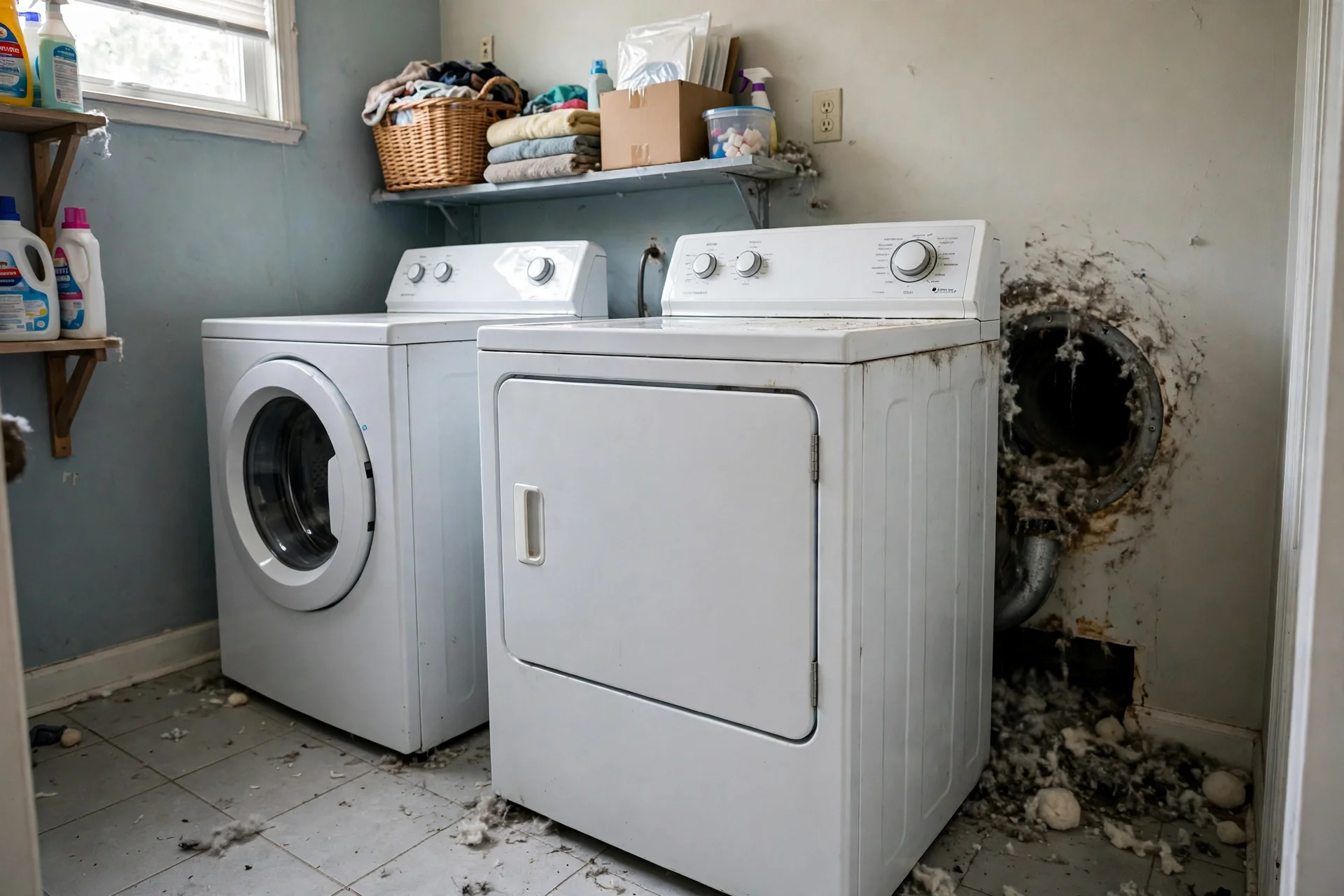
The most reliable sign of a clogged dryer vent is that clothes take longer than normal to dry, or come out damp after a full cycle. Other common signs include a dryer that runs unusually hot, a burning smell, lint around the dryer or the outdoor vent, and an outdoor flap that barely opens. The National Fire Protection Association (NFPA) lists longer drying times as a reason to clean the vent sooner, and the flap and lint signs are things you can check in a few minutes.
One sign deserves action right away: a burning smell. Stop the dryer and unplug it until you know the cause. The others are worth acting on soon, and the checks below will help you tell how bad the blockage is.
Signs you’ll notice while doing laundry
Clothes take longer to dry. A load that used to finish in one cycle now needs two, or clothes come out damp after a full cycle. Moist air has to leave the dryer through the vent, so a restricted vent keeps it in the drum.
The dryer or the clothes feel hotter than normal. Clothes can come out hot but still damp, which usually means heat is being produced but moist air isn’t getting out. Home Depot also lists an unusually hot dryer exterior as a sign.
A warning light comes on. Some dryers have a “check vent” light. Whirlpool says its light means airflow is restricted.
The dryer shuts off before the cycle ends. Cleaning companies list this as a sign, though it can have other causes too.
A burning smell. Lint is flammable, and lint that’s heating up in a restricted vent can smell like scorching. If you smell burning, stop the dryer and unplug it.
A musty smell, or a hot, humid laundry room. Both can point to moisture that isn’t leaving the house.
More lint on clothes. Home Depot lists extra lint on clothing after drying, and a lint screen that catches less than it used to.
Signs you’ll see around the dryer and outside
Lint behind or around the dryer. Lint belongs on the screen, not on the floor or around the vent opening.
Lint or debris at the outdoor vent hood. This includes leaves, snow, or a bird’s nest. GE’s manuals say to make sure no wildlife is nesting inside the duct or hood.
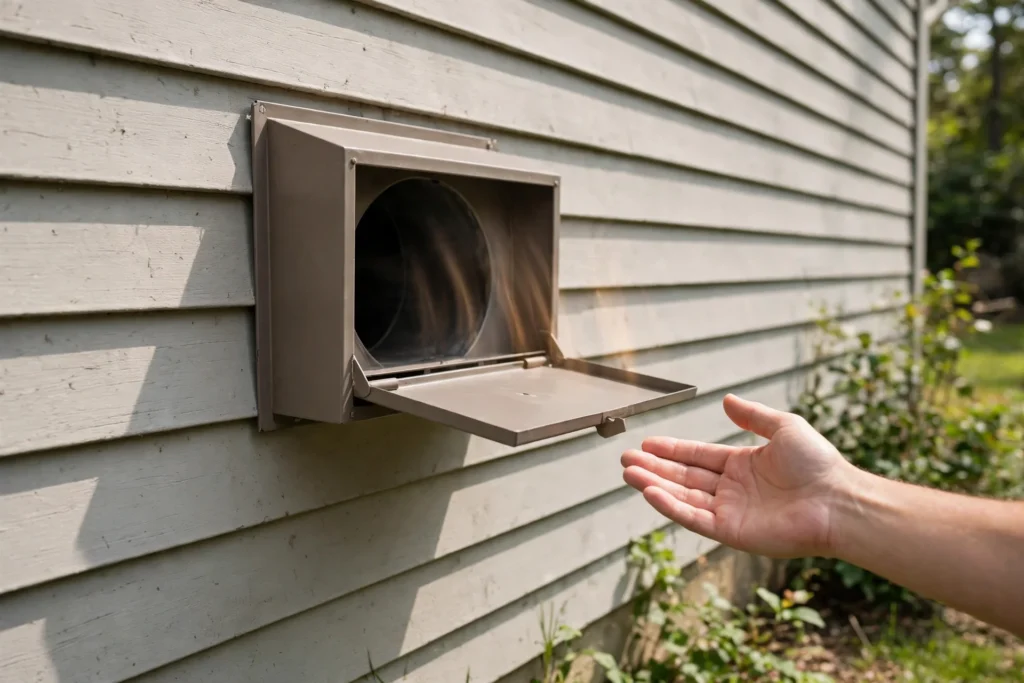
A flap that doesn’t open. NFPA says the outdoor flap should open when the dryer runs, and that snow or debris shouldn’t cover it.
Weak airflow outside. Cleaning companies suggest holding a hand near the flap while the dryer runs. You should feel steady, warm air. A weak trickle suggests a restriction.
A crushed, kinked, or loose duct behind the dryer. NFPA says to make sure the vent isn’t damaged, crushed, or restricted. Whirlpool advises leaving at least 4 inches between the dryer and the wall so the duct doesn’t get squashed.
A quick vent check
Empty the lint screen first. A full screen can cause slow drying on its own.
Go outside while the dryer runs. The flap should open, and you should feel steady, warm air. Little or no air, or a flap that stays shut, points to a restriction.
Look at the vent hood. Check for lint, leaves, snow, or a nest.
Check behind the dryer. Unplug it and pull it out only far enough to see the duct. If you have a gas dryer, be careful not to strain the gas line, and skip this step if you’re unsure. Look for a crushed, kinked, or loose duct and lint around the joints.
Time a normal load. If it takes noticeably longer than it used to, the vent is the first thing to rule out.
What to do about each sign
| Sign | What to do |
|---|---|
| Burning smell | Stop the dryer and unplug it. Don’t use it again until the vent has been cleaned or inspected. |
| Longer drying times, or hot but damp clothes | Clean the lint screen, check the outdoor flap, and book a vent cleaning rather than running extra cycles. |
| Stuck flap or lint at the hood | Clear loose debris if you can reach it safely, and have the whole duct cleaned. |
| Lint behind the dryer | Clean the area, then check that the duct is connected and not crushed. |
| Check-vent light | Look for a crushed duct and lint, and clean the vent. Your manual explains what the light means for your model. |
When it isn’t the vent
Slow drying has other causes. A dirty or residue-coated lint screen, an overloaded drum, a failing heating element, or a vent run that’s longer than your dryer’s manual allows can all produce similar symptoms. If the vent is clean and the problem continues, check the manual or call a repair technician.
Where to start
The next time you run a load, walk outside and watch the flap. It takes a minute, and it tells you more than guessing. If you see any sign on this list, schedule a cleaning rather than waiting for the yearly date. If you can’t remember when the vent was last cleaned, assume it’s due.
Frequently asked questions
Why are my clothes hot but still damp?
That usually means the dryer is producing heat, but moist air can’t escape because the vent is partly blocked. Check the flap and look for lint first. If the vent is clear, another dryer fault could be responsible.
Can a clogged vent raise my energy bills?
It can. Whirlpool’s guidance notes that improper venting can lead to longer drying times and higher energy use. We haven’t found a reliable figure for how much, so we don’t give one.