
How Often to Clean Your Dryer Vent: A Yearly Minimum, and When to Do It Sooner
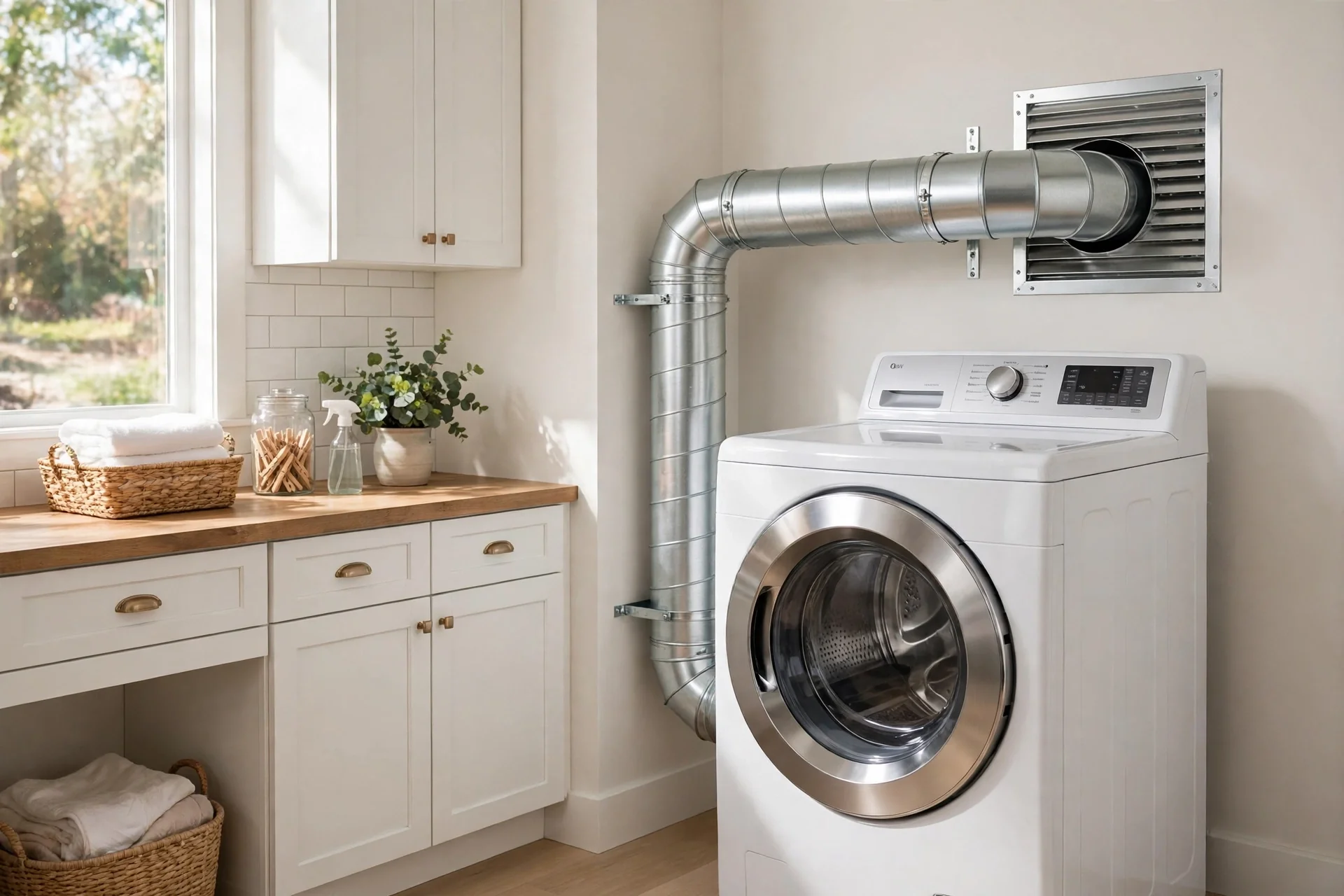
How often to clean dryer vent? Clean your dryer vent at least once a year. That’s the baseline from the National Fire Protection Association (NFPA), and several dryer manufacturers say the same in their manuals. Clean it sooner if clothes start taking longer than normal to dry, or if you have heavy laundry use, shedding pets, or a long vent run, since those can fill a duct with lint faster. Cleaning companies often suggest every six months or so in those cases, though that’s industry advice, not an official rule.
Your lint screen is a separate job. You empty it before or after every load. This article is about the duct behind the dryer and the vent hood outside, which the lint screen doesn’t clean.
How Often to Clean Dryer Vent: What the main sources recommend
| Source | Recommendation |
|---|---|
| NFPA dryer safety tips | Once a year, or more often if clothes take longer than normal to dry |
| GE owner’s manuals | Inspect and clean the exhaust duct at least once a year, and have the dryer interior and duct cleaned once a year by qualified service personnel |
| LG owner’s manuals | Inspect and clean the exhaust duct at least once a year (one model’s manual also says to check the ductwork for lint monthly) |
| Whirlpool | Every one to two years, or as needed when drying performance drops |
| Samsung (older model manual) | Every two to three years, or more often depending on use, by a qualified service person |
| Washington State Fire Marshal’s Office | Clean lint out of the vent pipe every three months |
The range is wide because these groups write for different audiences. Fire safety agencies lean cautious, while manuals assume average use. Once a year sits in the middle and is what most of these sources support. If your manual gives a longer interval, keep in mind that it assumes typical use and a standard vent. A busy household or a long duct can reasonably need cleaning sooner.
What shortens the interval
- Laundry volume. A large household or daily loads send more lint through the duct.
- Pets. Pet hair adds to the lint. Cleaning companies’ suggestions for pet and large-family homes range from every three months to every six to nine months.
- Vent length and bends. Long runs, many turns, and roof exits tend to collect lint more easily and can make a blockage harder to reach.
- Vent material. Whirlpool’s instructions say not to use plastic or foil vent. If yours is one of those, replace it with metal, and clean it more often until you do.
- A history of slow drying. If a past cleaning fixed long dry times, your setup may clog faster than average.
Picking a starting interval
These are starting points drawn from manufacturers’ minimums and cleaning-company guidance, not rules. They show how often to clean dryer vent in common household situations.
| Your situation | Reasonable starting point |
|---|---|
| One or two people, light laundry, short straight wall vent | Once a year |
| Family of three or four, regular laundry | Once a year, with a quick check at the six-month mark |
| Large family, daily loads, or shedding pets | Every six months |
| Long vent, many bends, or a roof exit | Every six to twelve months, depending on how it performs |
Adjust based on what you find. If the duct is nearly clean after a year, yearly is probably fine. If whoever cleans it pulls out a thick mat of lint, shorten the interval.
Checking between cleanings
A few quick checks tell you whether the vent can wait:
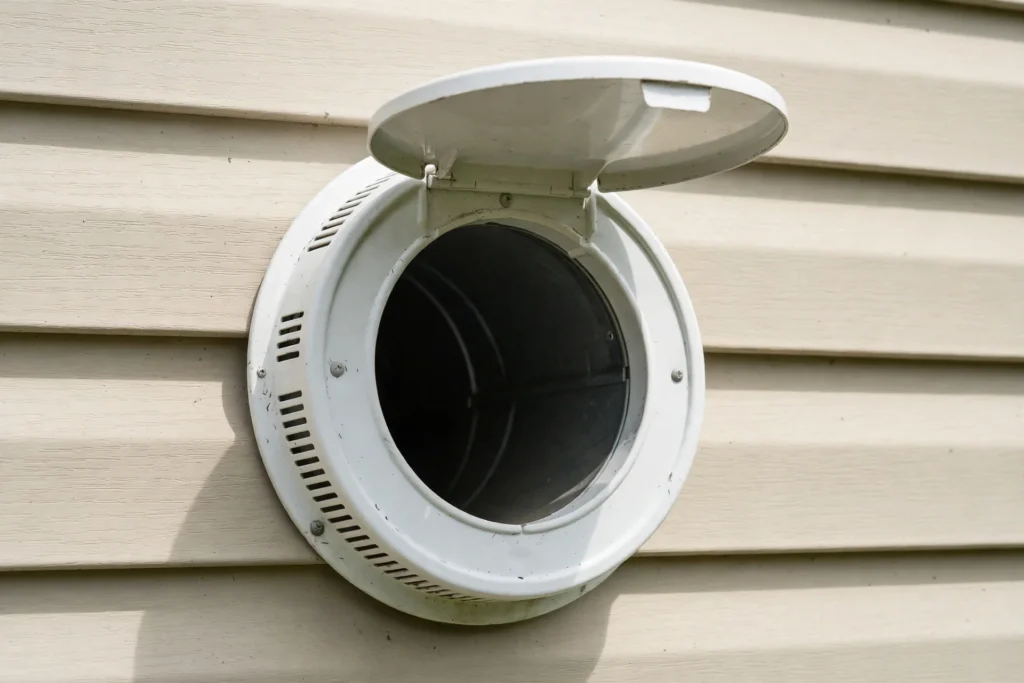
- Run the dryer and watch the outdoor flap. It should open. NFPA also says to check that snow or debris isn’t covering it.
- Pay attention to drying time. NFPA ties longer-than-normal drying to the need to clean sooner.
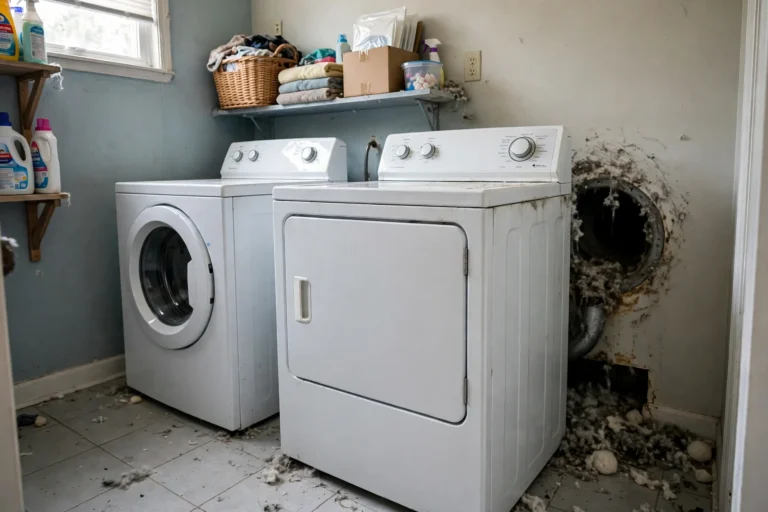
- Look behind the dryer for a crushed or kinked duct and lint around the joints.
If something looks off, our guide to the signs of a clogged dryer vent explains what else to watch for.
When to clean regardless of the calendar
- You just moved in and don’t know when the vent was last cleaned.
- You’re hooking up a new dryer to an old vent. Whirlpool’s installation instructions say to clean lint from the entire length of the existing system first.
- You suspect an animal nest. GE’s manuals say to make sure no birds, insects, or other wildlife are nesting inside the duct or hood.
- You smell burning. Stop the dryer and unplug it until you’ve found the cause.
Where to start
Find your dryer’s model number and check the maintenance section of its manual for the maker’s interval. Use once a year as your baseline, and shorten it if two or more of the factors above describe your home. Then put the next date in your calendar, and ask whoever cleans the vent what they found so you can adjust. Once you have that interval, you will know how often to clean dryer vent for your own home.
Frequently asked questions
My manual says every two to three years. Can I wait that long?
For how often to clean dryer vent, manuals differ, and at least one older Samsung manual gives that range. NFPA recommends yearly, and a manual’s interval assumes typical use. If you do a lot of laundry, have pets, or have a long vent, the shorter interval is the safer choice.
Can I clean the vent too often?
More frequent cleaning is fine for the dryer. The practical limits are the cost of a professional and the effort of moving the dryer. Just make sure the duct is reconnected securely each time.
Do I need a professional every time?
Not necessarily. GE’s manuals describe homeowner steps for the exhaust duct and recommend a qualified technician for the interior once a year. A pro makes more sense if the vent is long, exits through the roof, or you can’t reach it. We cover DIY cleaning in a separate guide. Whatever route you choose, set a reminder for how often to clean dryer vent so it does not slip.
One Comment